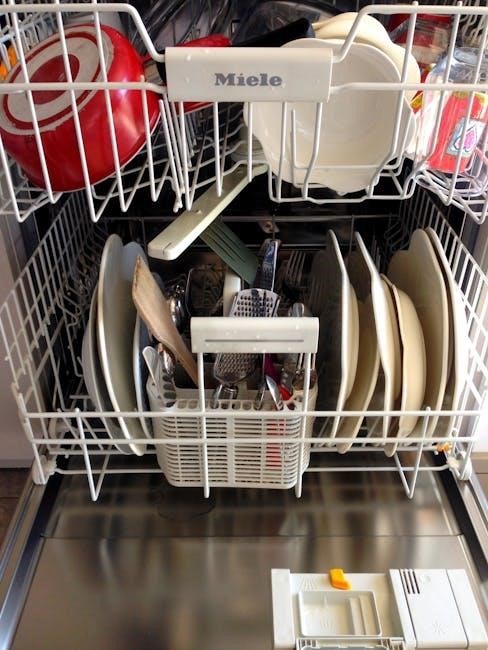
GE Appliances provides comprehensive owner manuals, including use and care guidelines for top control dishwashers, ensuring optimal performance and longevity.
These resources detail installation, features, and troubleshooting, readily available on their website for a seamless user experience with your appliance.
Overview of Top Control Dishwashers
GE’s top control dishwashers offer a sleek, modern aesthetic integrated into kitchen designs, prioritizing convenience and user-friendly operation. These models feature intuitive controls discreetly positioned along the top edge of the door, eliminating the need for a visible front panel.
Owner manuals are crucial for understanding the specific features of each model, including cycle options, loading recommendations, and maintenance procedures. GE Appliances emphasizes accessibility to these resources, providing detailed guidance for maximizing cleaning performance and extending the dishwasher’s lifespan. Utilizing the manual ensures efficient operation and addresses potential issues promptly.
Importance of the User Manual
The GE dishwasher owner manual is paramount for unlocking your appliance’s full potential and ensuring safe, effective operation. It provides detailed instructions on everything from initial setup and proper loading techniques to detergent usage and cycle selection.
GE Appliances stresses the importance of referencing the manual for troubleshooting common issues, preventing costly repairs, and understanding warranty information. Accessing these literature resources online via the GE Appliances website guarantees you have the latest guidance at your fingertips, maximizing your dishwasher’s performance and longevity.
Understanding the Control Panel
GE dishwasher top control panels feature intuitive buttons and displays, detailed in the owner’s manual, for selecting cycles and monitoring progress efficiently.
Key Buttons and Their Functions
GE dishwasher control panels boast several key buttons, each with a specific function detailed within your owner’s manual. The ‘Power’ button initiates or stops the dishwasher, while ‘Cycle Selection’ allows choosing the appropriate wash cycle. ‘Options’ modifies cycle settings like heated dry or sanitize.
Buttons for ‘Delay Start’ schedule operation, and ‘Cancel’ halts a running cycle. The ‘Child Lock’ feature prevents accidental operation, enhancing safety. Understanding these controls, as outlined in the manual, ensures optimal dishwasher use and customized cleaning performance for various dish loads.
Display Indicators and Meanings
GE dishwasher displays utilize various indicators to communicate the machine’s status, as explained in the owner’s manual. A ‘Cycle Progress’ bar visually represents the wash cycle’s stage. ‘Error Codes’ signal malfunctions, requiring troubleshooting. ‘High Temp Wash’ or ‘Sanitize’ lights confirm activated options.
‘Rinse Aid Low’ alerts for replenishment, while ‘Clean’ indicates cycle completion. Flashing lights often signify issues needing attention. Deciphering these indicators, detailed in your manual, allows for informed operation and prompt resolution of any potential dishwasher problems.
Cycle Selection Guide
GE dishwashers offer diverse cycles, detailed in the owner’s manual, for varied cleaning needs. ‘Normal’ suits everyday loads, while ‘Heavy Duty’ tackles baked-on messes. ‘Quick Wash’ efficiently cleans lightly soiled dishes. ‘Delicate’ protects fragile items, and ‘Auto’ adjusts settings automatically.
‘Sanitize’ provides enhanced hygiene, and ‘Rinse Only’ pre-cleans dishes. Selecting the appropriate cycle optimizes cleaning performance and conserves water and energy, ensuring sparkling results every time. Refer to your manual for specific load recommendations.

Loading Your Dishwasher Correctly
GE manuals emphasize proper rack arrangement for optimal cleaning; avoid overcrowding and ensure spray arms aren’t blocked for efficient water circulation.
Correct loading maximizes cleaning power and prevents re-washing, saving both time and resources.
Proper Rack Arrangement
GE dishwasher manuals detail the importance of strategic loading for superior cleaning results. Place heavily soiled items facing the spray arms, ensuring water reaches all surfaces effectively.
Avoid overlapping dishes, as this hinders water circulation and can lead to incomplete cleaning. Utilize the adjustable racks and tines to accommodate various dish sizes and shapes, maximizing space and efficiency.
Larger items should be positioned along the sides or back, preventing obstruction of the spray arms’ rotation. Proper arrangement guarantees thorough cleaning and minimizes the need for re-washing, saving both time and energy.
Items That Should Not Be Washed
GE dishwasher manuals explicitly advise against washing certain items to prevent damage to both the dishwasher and the articles themselves. Avoid washing wood, cast iron, and delicate crystal, as these materials can warp, rust, or chip.
Hand-painted china and items with glued parts are also unsuitable for dishwasher cleaning. Non-stick cookware may lose its coating, and aluminum can discolor.
Following these guidelines ensures the longevity of your belongings and maintains the optimal performance of your GE dishwasher, preventing potential issues.
Loading Tips for Optimal Cleaning
GE dishwasher manuals emphasize proper loading for effective cleaning. Ensure spray arms aren’t blocked by tall items; arrange dishes so water reaches all surfaces. Face soiled surfaces towards the center, and avoid overcrowding.
Secure lightweight items to prevent them from flipping during the wash cycle. Place silverware in the basket with handles down for thorough cleaning.
Proper rack arrangement maximizes water circulation, leading to sparkling clean dishes and preventing re-washing, ultimately saving time and energy with your GE appliance.

Detergent and Rinse Aid Usage
GE dishwasher manuals recommend using recommended detergent types and proper amounts in the dispenser for optimal results, alongside rinse aid for spotless drying.
Recommended Detergent Types
GE dishwasher manuals generally advise using a high-quality dishwasher detergent specifically formulated for automatic dishwashers. Powder, gel, or pacs are all acceptable, but ensure they are designed for use in dishwashers to avoid excessive suds or residue.
Avoid using hand dish soap, as it will create an overwhelming amount of foam and can damage the appliance. The manual may also specify detergents that have been tested and approved for use with GE dishwashers, guaranteeing optimal cleaning performance and protecting internal components.
Always follow the detergent manufacturer’s instructions for proper dosage based on water hardness and soil level.
Detergent Dispenser Instructions
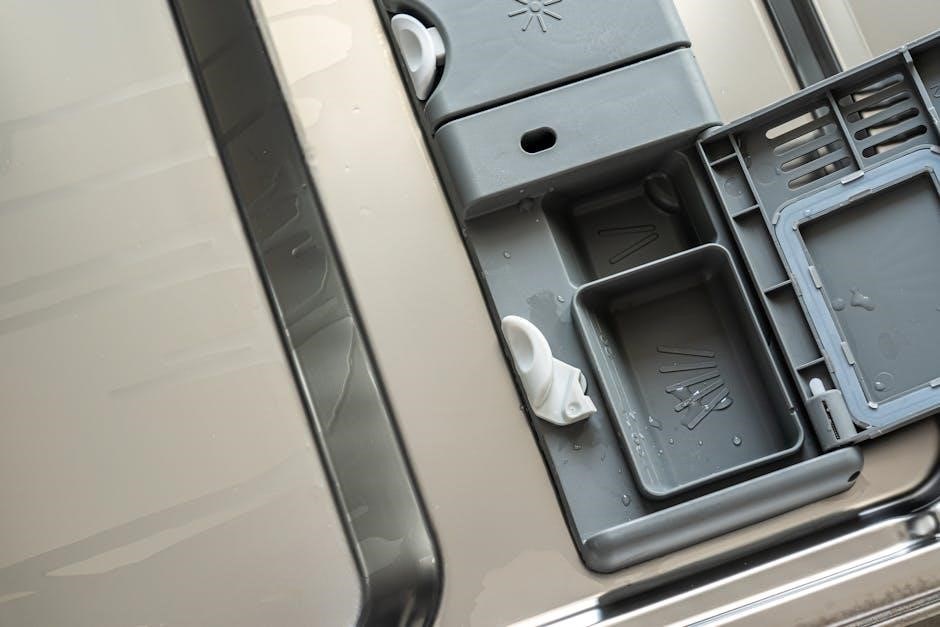
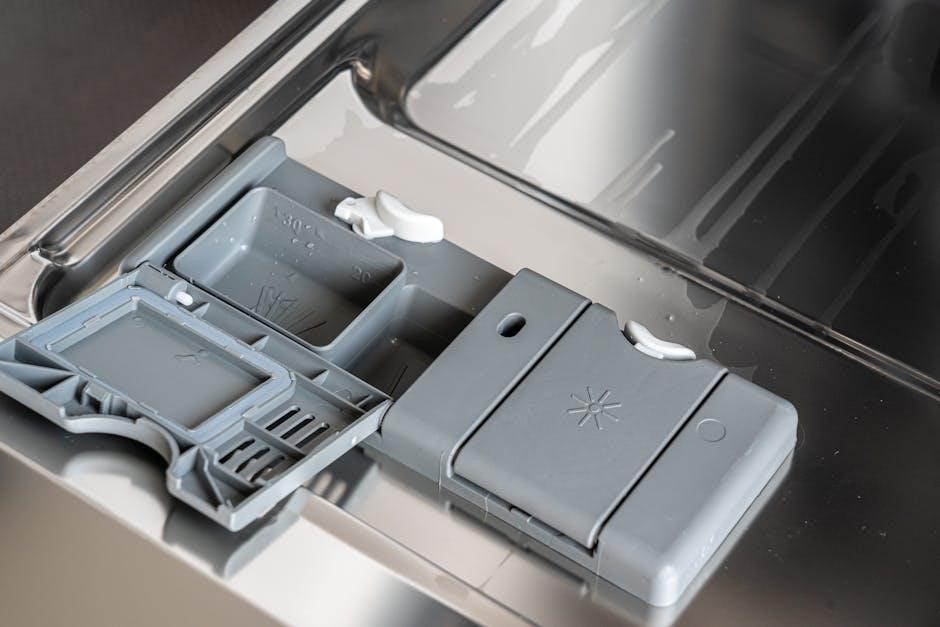
GE dishwasher top control models feature a detergent dispenser, typically located inside the door. Consult your specific model’s manual for precise location and operation, as designs can vary. Generally, fill the main compartment with detergent, ensuring it doesn’t exceed the maximum fill line.
For pacs, place them directly into the dispenser. Close the dispenser door securely until it latches. The dispenser automatically releases the detergent at the appropriate time during the wash cycle. Avoid pre-rinsing dishes, as detergents rely on food particles for optimal cleaning action.
Rinse Aid Compartment and Benefits
GE dishwashers with top controls include a rinse aid compartment, usually situated near the detergent dispenser. This compartment accepts liquid rinse aid, which significantly improves drying performance and prevents water spots on dishes. Fill the rinse aid dispenser until the indicator window shows it’s full.
Adjust the rinse aid level based on water hardness; higher settings are needed for harder water. Rinse aid also enhances the overall cleanliness and shine of your dishes, contributing to a more satisfying wash result.

Dishwasher Cycles Explained
GE dishwasher manuals detail various cycles – Normal, Heavy Duty, and Quick Wash – each designed for specific cleaning needs and soil levels of your dishes.
Normal Cycle
The Normal cycle, as detailed in your GE dishwasher manual, is designed for everyday dishwashing needs. It’s ideal for moderately soiled dishes, glasses, and cookware.
This cycle balances cleaning power with energy efficiency, utilizing a combination of washing and rinsing stages. The manual will specify water temperature settings and recommended detergent amounts for optimal results.
Typically, the Normal cycle offers a good balance between cleaning performance and resource conservation, making it a versatile choice for daily use. Refer to your specific model’s manual for precise details.
Heavy Duty Cycle
The Heavy Duty cycle, as outlined in your GE dishwasher manual, is specifically engineered for tackling heavily soiled pots, pans, and casserole dishes. This cycle employs higher water temperatures and increased wash pressure.
It’s recommended for items with baked-on food residue that require a more intensive cleaning process. The manual will advise on appropriate detergent usage and potentially suggest pre-rinsing for exceptionally stubborn messes.
Expect a longer cycle duration with Heavy Duty, but the results will be significantly improved for those challenging cleaning tasks.
Quick Wash Cycle
The Quick Wash cycle, detailed in your GE dishwasher’s manual, is designed for lightly soiled dishes needing a fast refresh. This cycle utilizes lower water temperatures and a shorter wash duration, making it ideal for everyday use.
It’s perfect when you don’t have a full load or when dishes only require a quick rinse and clean. The manual will specify the recommended detergent amount for optimal results within this shorter timeframe.
Remember, heavily soiled items may not be fully cleaned using this cycle.
Troubleshooting Common Issues
GE dishwasher manuals offer guidance for resolving issues like starting problems, poor cleaning, or leaks, ensuring efficient operation and extending appliance life.
Dishwasher Not Starting
If your GE top control dishwasher fails to start, the owner’s manual suggests checking several key areas. First, verify the power cord is securely plugged into a functioning outlet. GE manuals emphasize checking the household circuit breaker or fuse box for tripped breakers or blown fuses.
Next, ensure the door is firmly latched, as a safety interlock prevents operation if not properly closed. Consult the manual for specific reset procedures if the control panel isn’t responding. GE also advises checking for any error codes displayed, as these pinpoint the issue.
Poor Cleaning Performance
If your GE top control dishwasher isn’t cleaning effectively, the manual recommends verifying proper loading techniques. Avoid overcrowding and ensure spray arms aren’t blocked by dishes. GE manuals stress using the correct amount of detergent, as too little or too much can hinder cleaning.
Check the water temperature; it should be at least 120°F. Also, inspect and clean the filter regularly, as a clogged filter restricts water circulation. GE advises running a dishwasher cleaner cycle periodically to remove buildup and maintain optimal performance.
Leaking Issues
If you notice leaking from your GE top control dishwasher, the owner’s manual directs you to first check the door gasket for damage or debris. Ensure the dishwasher is level, as an uneven unit can cause water to spill. GE manuals also advise inspecting the water inlet valve and drain hose connections for tightness.
Verify the spray arms aren’t cracked, and that the detergent dispenser is closing correctly. GE recommends avoiding excessive detergent, which can create oversudsing and leaks. If issues persist, consult the manual for specific troubleshooting steps or contact GE support.
Maintenance and Cleaning
GE dishwasher manuals emphasize regular filter and spray arm cleaning for peak performance. Consistent interior cleaning maintains hygiene and prevents odors, extending appliance life.
Cleaning the Filter
GE dishwasher manuals consistently highlight the importance of a clean filter for optimal performance. Food particles and debris can accumulate, reducing cleaning effectiveness and potentially causing drainage issues.
Typically, the filter is located at the bottom of the dishwasher interior. GE recommends removing and rinsing the filter under hot water after each use, or at least weekly, depending on usage.
Consult your specific model’s manual for detailed instructions on filter removal and reinstallation, as designs can vary. A clean filter ensures efficient water circulation and sparkling clean dishes.
Cleaning the Spray Arms
GE dishwasher manuals emphasize regular cleaning of the spray arms to maintain peak washing performance. Food particles can clog the spray arm nozzles, hindering water distribution and reducing cleaning power.
To clean, detach the spray arms – usually by unscrewing or unclipping them – and inspect the nozzles for blockages. Use a toothpick or small wire to clear any debris.
Rinse the spray arms thoroughly under running water before reattaching them securely. GE recommends checking and cleaning spray arms monthly for consistently spotless results.
Dishwasher Interior Cleaning
GE dishwasher manuals advise regular interior cleaning to prevent odors and maintain hygiene. After extended use, residue can build up on the dishwasher’s walls and door.
Run an empty cycle with a dishwasher cleaner, or use a cup of white vinegar placed in a dishwasher-safe bowl on the upper rack. Avoid abrasive cleaners, as they can damage the stainless steel interior.
Wipe down the door gasket with a damp cloth to remove any food particles. GE suggests monthly cleaning for a fresh and sanitary dishwasher environment.

Safety Precautions
GE dishwasher manuals emphasize electrical safety, proper ventilation, and utilizing the child safety lock feature to prevent accidental operation or injury.
Electrical Safety
GE dishwasher manuals strongly advise against improper electrical connections, emphasizing the necessity of a dedicated, grounded circuit for optimal and safe operation.
Never use extension cords or adapters, as they can pose a fire hazard or disrupt the appliance’s performance.
Always disconnect the power supply before performing any maintenance or repairs, and if the power cord is damaged, it must be replaced by a qualified technician to avoid electrical shock.
Refer to the manual for specific grounding instructions and voltage requirements for your model.
Child Safety Lock Feature
GE dishwasher manuals detail the Child Safety Lock feature, designed to prevent accidental operation by young children, ensuring their safety around the appliance.
This function typically disables the control panel buttons, preventing cycle changes or starting the dishwasher unintentionally.
The manual provides specific instructions on how to activate and deactivate this lock, often involving a button combination held for a few seconds.
Utilizing this feature provides peace of mind, especially in households with curious little ones.
Proper Ventilation
GE dishwasher manuals emphasize the importance of proper ventilation for optimal performance and to prevent potential issues like moisture buildup and odors.
Adequate airflow around the dishwasher helps dissipate heat generated during cycles, contributing to efficient drying and preventing damage to surrounding cabinetry.
The manual advises against blocking the dishwasher’s vents and ensuring sufficient space around the unit during installation.
Maintaining good ventilation extends the dishwasher’s lifespan and ensures consistently clean results.

Finding Your Specific Model’s Manual
GE Appliances offers easy access to dishwasher manuals via their website; locate your model number and download the corresponding guide instantly.
Using the GE Appliances Website
GE Appliances’ website is the primary hub for accessing dishwasher manuals, offering a streamlined search experience. Navigate to the “Service and Support” section, then “Literature,” to find owner manuals, installation guides, and quick spec sheets.
The site utilizes keyboard navigation for accessibility – use arrows to explore links and menus. You can directly search by model number for a precise match.
Downloading is simple, providing immediate access to valuable information regarding your specific top control dishwasher. Explore rebates and offers while you’re there!
Model Number Location
Locating your GE dishwasher’s model number is crucial for finding the correct manual. Typically, you’ll find a label containing this information inside the dishwasher door, along the edge.
Look for a sticker or etched plate – the model number is a combination of letters and numbers. It’s essential for accurate searches on the GE Appliances website.
Having this number readily available ensures you download the precise manual tailored to your top control dishwasher, unlocking specific instructions and support resources.
Downloading Manuals Online
GE Appliances offers a convenient online platform for downloading your dishwasher’s manual. Navigate to their official website and utilize the search function, entering your specific model number.
You’ll find a variety of literature, including owner manuals, installation guides, and quick spec sheets, all available in digital format.
This allows for instant access to troubleshooting tips, cycle explanations, and safety precautions, ensuring you can effectively operate and maintain your top control dishwasher.
Leave a Reply
You must be logged in to post a comment.